Skip to content
RayAlign
Smart dual-axis solar tracking

More solar yield
from every roof you quote.

Dual-axis trackers for flat roofs, pitched roofs, open ground and existing arrays — and the photo-to-3D quoting software your team plans them with. Photograph a site, model the shading around it in 3D, and hand over a yield estimate on the first visit.

No minimum volume — we reply within one business day.

  • Photo-to-3D quoting software included
  • EU-funded R&D
  • Rooftops, terraces & parks
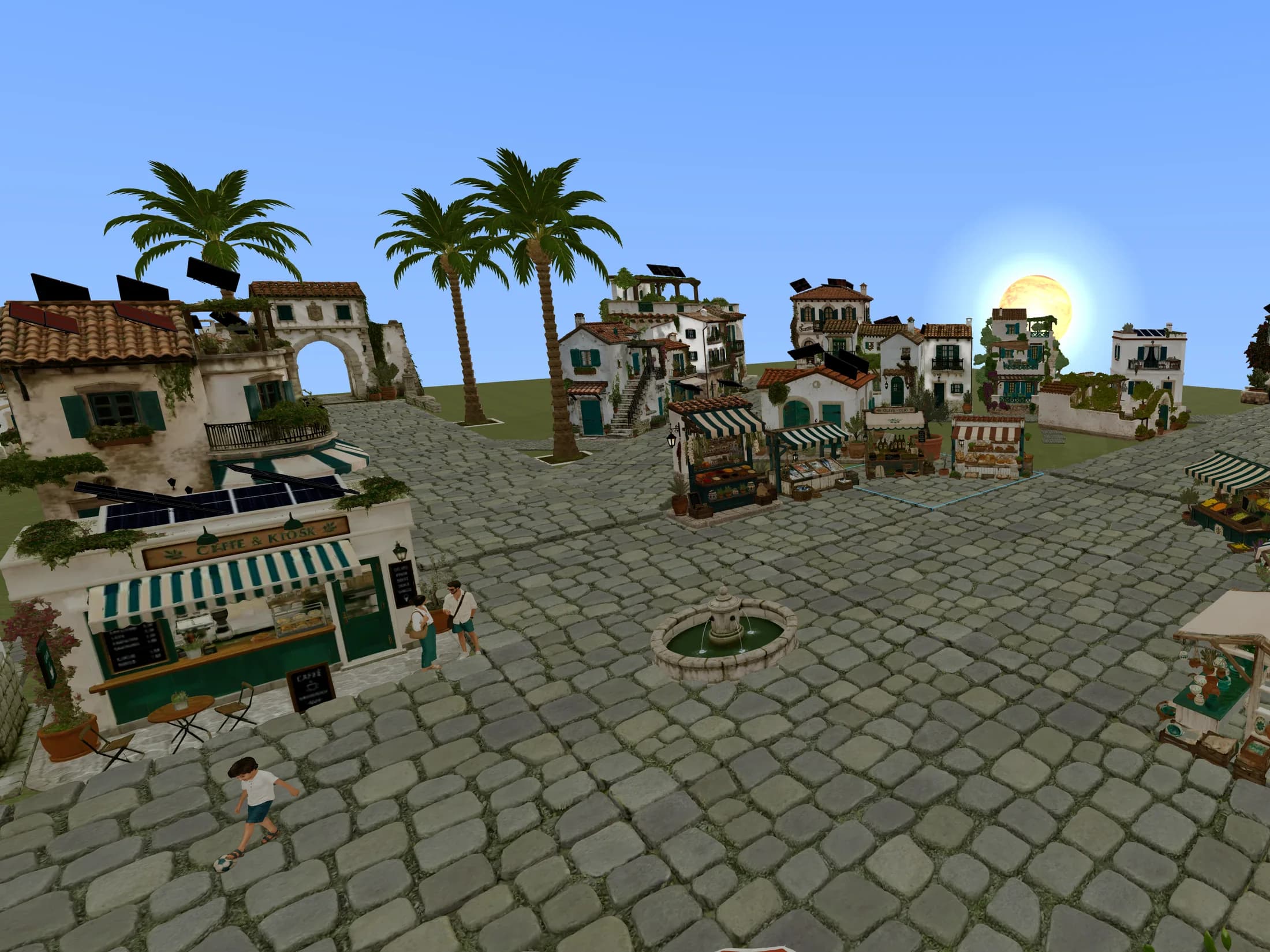
The partner app's 3D view of a simulated village at sunrise, with RayAlign dual-axis trackers standing on several of the rooftops.Concept visualisation
Tracking precision
≤ 0.7°design target
Tilt range
±30°dual-axis
Annual uplift
1.98×vs. flat-mounted
2×
Annual yieldvs. flat-mounted modules

1.98× over a full simulated year

3.5×
Winter yieldvs. flat-mounted modules

3.55× across November–February

+49%
Annual yieldvs. fixed 30° south-facing panels

+49% over a full simulated year

< 3 h
Typical installationon site, with two people

Dual-axis tracker, design target

Digital-twin simulation, Vienna: 1.44 kWp, four modules, south-facing, clear sky without shading — an upper bound. Real yield depends on weather, shading and soiling.

Run the live simulation ↗
Why RayAlign

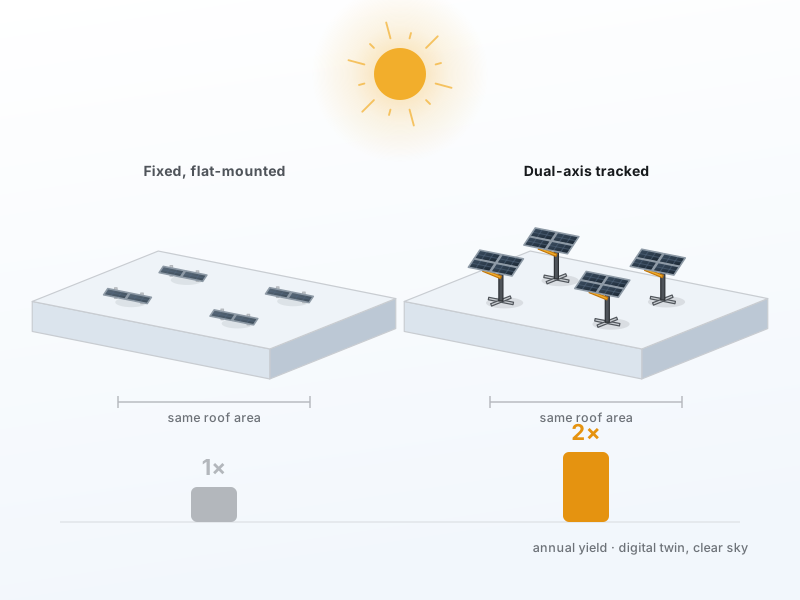
More energy. Same footprint.

We design and build dual-axis solar trackers that raise energy yield where space is limited. We do not install them: every system goes up through an installation partner, including the enquiries that reach us directly. Precision mechanics and IoT control lift output on rooftops, terraces and solar parks.

Diagram comparing two identical roof areas: one carrying flat-mounted panels, one carrying dual-axis trackers, with the resulting annual yield shown as two bars.Concept visualisation
Make high-yield solar simple: faster ROI, clean installation, and real-time optimisation — so more people can run on sun, year-round.
  • 01

    Efficiency first

    More kWh per square metre through dual-axis tracking, not more roof area.

  • 02

    Built to last

    Weather-resistant hardware designed to IP65, with roughly one service visit a year.

  • 03

    Open & smart

    Remote monitoring, over-the-air updates, and telemetry you can use for ROI tracking.

  • 04

    Sustainable value

    Measurable CO₂ reduction and predictable performance across the system lifetime.

Products

Two tracker concepts. One smart platform.

Each system is engineered for a different site — pick by where the panels go, not by what fits the catalogue.

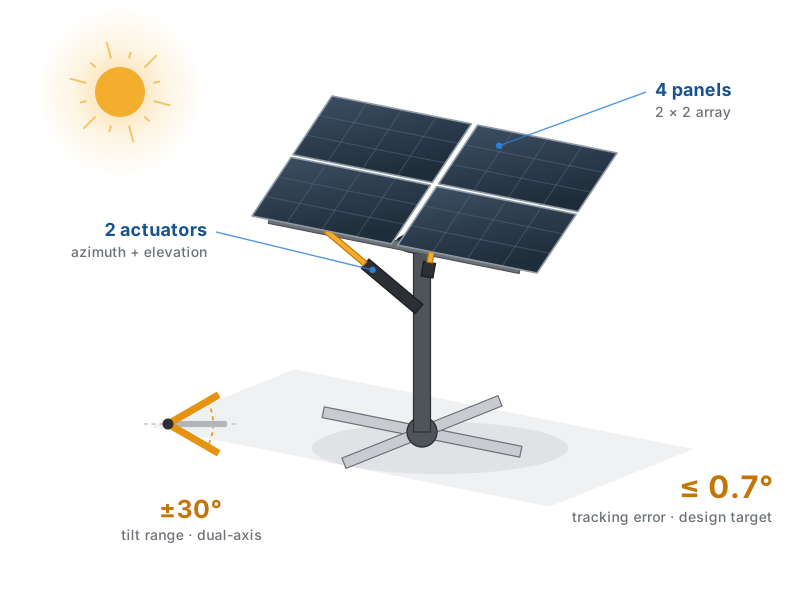
Schematic of a RayAlign 2Act tracker: four photovoltaic panels in a 2×2 array on a pedestal with a crossed ballast foundation, driven by two actuators for azimuth and elevation, annotated with the ±30° tilt range and the 0.7° tracking-error target.Concept visualisation
01Terraces & small roofs

Dual-Axis Tracker

Up to 49% more energy than fixed tilted panels in our digital twin, with tracking error under 0.7° and a footprint sized for terraces and small roofs.

Best for: Limited space, ground and terrace installs, small flat roofs.

  • Compact footprint — minimal vertical space
  • Typical install under 3 h with two people
  • Maintenance roughly once a year
  • Designed to IP65; CE and TÜV certification targeted
Key specs
  • Compact footprint — minimal vertical space
  • Typical install under 3 h with two people
  • Maintenance roughly once a year
  • Designed to IP65; CE and TÜV certification targeted
View technical specifications

≤ 0.7° tracking error
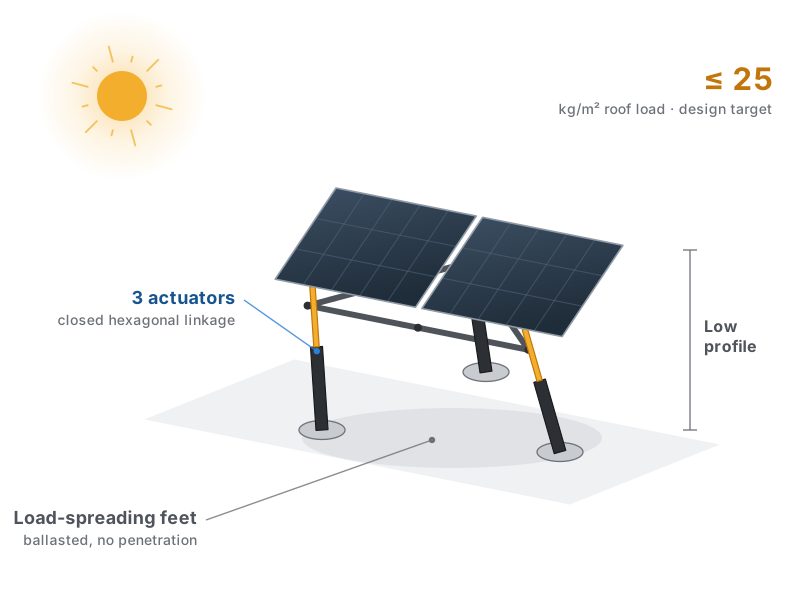
Schematic of a RayAlign 3Act rooftop tracker: two photovoltaic panels carried on a closed hexagonal linkage, driven by three actuators standing on load-spreading feet, annotated with the 25 kg/m² roof-load target.Concept visualisation
02Pitched & flat roofs

3-Actuator Rooftop Tracker

Low profile with optimised roof load, efficient actuation and a quick install window.

Best for: Roofs where weight and structural load matter.

  • Roof-friendly mounting, compact height
  • Target load ≤ 25 kg/m²
  • Low-power electronics, remote control ≥ 50 m
  • MTBF target ≥ 50,000 h
Key specs
  • Roof-friendly mounting, compact height
  • Target load ≤ 25 kg/m²
  • Low-power electronics, remote control ≥ 50 m
  • MTBF target ≥ 50,000 h
View technical specifications

≤ 25 kg/m² roof load

From us

  • Dual-axis trackers and their mounting structures
  • Control electronics, firmware and OTA updates
  • The simulation and the partner platform
  • Telemetry and remote control over MQTT

Through our partners

  • Modules, inverters and battery storage
  • The installation itself, by a firm in your region

A complete system either way — we carry the tracking layer and everything around it, and source the rest through supply partners we already work with.

Not sure which tracker fits the job?

Send us the site details and we'll come back with a clear recommendation for your customer.

Partner platform

Simulate the roof before you climb it.

Every partner gets the software we plan with ourselves. You place the building and the shading; the simulation does the rest — sun position, air mass, incidence angle, cell temperature, losses — and you leave the first visit with a yield figure instead of a promise to send one.

  1. 1

    Photograph the building

    One photo of the prospect's house or hall — taken while you are standing there, or sent over by the customer. That is the whole input.

  2. 2

    Upload it to the app

    The photo goes into the partner app from your phone, and the customer record is created around it.

  3. 3

    Set the site up in 3D

    The photo becomes a 3D model of the building. You search the real address, then set tilt, orientation and module count; the trees and neighbours you place by eye, sized against the house. Shading is an angular relationship, so what matters is getting them right relative to the roof.

  4. 4

    Run the year

    The simulation walks the sun's path for that address and integrates the yield tick by tick. Every mounting tilt and all four tracking modes are ranked side by side, ideal against realistic once the losses are switched on. The physics is exact; the building you placed is not, so the measured survey still happens before anything is ordered.

Partner app — tracker configurations ranked by yield
The partner app ranking every tracker configuration on one roof by specific yield, listing orientation, tilt, module count and annual kWh for each, beside live power curves for four of them.Concept visualisation

Only the building outline and the obstacle sizes are judged by eye. Everything that drives the physics is a value, and everything downstream of it is computed.

You enter

  • Location
  • Date & time
  • Tilt
  • Orientation
  • Module count
  • Tracker type

The simulation computes

  • Sun position
  • Air mass
  • Clear-sky attenuation
  • Incidence angle
  • Cell temperature
  • Shading
  • Soiling & PR
  • Inverter clipping

Every customer in one account

Sites, systems and contacts stay together. Reopen a quote from last season and the shading model that produced it is still attached to it.

Control and telemetry, not just charts

Installed trackers report over MQTT into the same account and take commands back the same way. A unit drifting out of alignment becomes your alert rather than your customer's phone call — and you can move it without driving there.

The customer opens it too

The site you built carries into your customer's own dashboard: opening their tracker shows their house in 3D, not a generic model. One model from the first photo through to the installed system, so the proposal and the plan cannot drift apart.

Partner accounts open with the pilot programme.

Digital twin

We simulated it before we built it.

Every figure on this page comes out of our own simulation — the same model we use to decide what to build next, and to plan an individual site before a single bracket is ordered.

Digital twin — one simulated day over the test village
Screen recording — digital twin

Specific yield by configuration

Digital twin

Vienna · 13 Nov 2024 – 14 Nov 2025 · kWh per kWp installed

Specific yield in kWh per kWp for four mounting configurations, 13 Nov 2024 – 14 Nov 2025
ConfigurationSpecific yield in kWh per kWp
Flat-mounted modules0° tilt · baseline
1,910
Fixed tilted panels30° south · baseline
2,539
RayAlign tracker±30° · the hardware we ship
3,783
Unrestricted tracking±90° · physical ceiling, not a product
4,432
vs. flat-mounted modules
1.98×vs. flat-mounted modules
vs. fixed tilted panels
+49%vs. fixed tilted panels
left on the table above ±30°
+17%left on the table above ±30°

Unrestricted ±90° tracking is the physical ceiling for this site, not a product we sell — it is shown so the cost of capping tilt at ±30° is visible rather than implied. Clear-sky simulation without shading, so treat every row as an upper bound.

The winter multiplier comes from flat modules collapsing at low sun angles, not from the tracker behaving differently: tilting alone already more than doubles winter output. Against a properly tilted array our gain stays near 50% in every season — which is why the tracker earns its keep on terraces and flat roofs, where modules usually lie flat.

Product development

Every mechanical constraint is priced in energy before it is built. Capping tilt at ±30° costs 17% a year against unrestricted tracking — that number drives the next revision.

Project planning

Before anything is ordered the site gets modelled — location, orientation, tilt, module count and the shading around it — and returns the yield for that layout, not a catalogue average. The building outline is drawn by eye, so it approximates the site rather than measuring it.

Yield forecasting

A versioned Planner result can feed the return estimate below, so a site-specific case can replace the clearly labelled workbook demonstration.

Want to see it run on a real address?

Returns & Payback

The payback figures you quote from.

The same calculator your team gets in the partner app. Choose a configuration, adjust the expected yield and electricity value, and hand your customer a clear investment estimate.

Configuration

Select the installation and tracker

Installation type
Selected tracker type

Number of trackers

1

Calculated from the approved panel capacity.

Energy assumptions

Adjust the values for this site

Tracker annual yield

2,000 kWh/yr

Calculated from the fixed-system yield and editable improvement.

How it works

From site check to smart tracking.

Four steps take your customer from enquiry to a producing, self-optimising tracker. Monitoring, alerts and over-the-air updates are included from day one.

< 3 hon site,
two people
  1. 1

    Site check & estimate

    You send the site details — size, shading, target kWp — or model them yourself in the partner app, and get an energy and ROI estimate back.

  2. 2

    Mount & connect

    Mount the tracker base, attach the panels, and connect power plus data over gateway, Wi-Fi or LAN.

  3. 3

    Calibrate & integrate

    Auto-calibration runs, location and timezone are set, the inverter and monitoring are linked, and OTA updates are switched on.

  4. 4

    Optimise in real time

    The controller aligns the array with the sun, adapts to weather and shading, and logs telemetry for performance review.

Step one is free, and it takes us a day.

Benefits

Engineered to make every sunny hour count.

Higher yield, smarter control, and hardware made for years outdoors — the things that turn solar hardware into a reliable investment.

Digital twin

annual yield vs. flat-mounted modules

Higher yield, faster payback

Compare model-specific hardware, energy value and operating assumptions in the calculator above. Every result stays scoped to the panels that are actually tracked.

24/7Engineering target

monitoring and remote control

Smart, real-time optimisation

IoT tracking with predictive shadow management, remote control, telemetry and over-the-air updates.

50k hEngineering target

MTBF design target

Built for reliability

Weather-resistant design to IP65, servicing roughly once a year, and a 50,000 h MTBF design target.

< 3 hEngineering target

typical install, two people

Easy to install

Compact form factor and a typical install under three hours with two people. Designed for EU compliance with CE/TÜV targets.

Performance depends on site conditions. Yield figures are digital-twin results under clear-sky conditions; reliability and installation figures are design targets from the SDD/QFD 2025 package, pending pilot validation.

Next step

Get the numbers for your own roof.

Tell us the location and roughly how much surface you have. We come back with a yield and payback estimate from the same digital twin every figure on this page was calculated with.

  • We never install — the build is always yours
  • A real engineer answers, not a sales script
  • Reply within one business day

Prefer to talk? +43 676 95 35 217

Projects & pilots

The pilot programme. Three countries.

Fifty tracker installations are planned across Austria, Slovakia and Hungary to validate the simulated gains under real conditions.

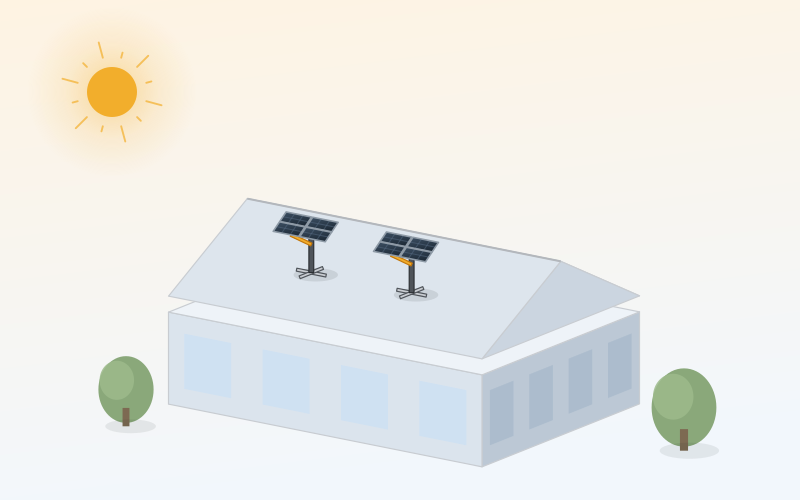
Schematic of a single-family house whose pitched roof carries two RayAlign trackers angled toward the sun.Concept visualisation

Residential

Planned

25 households

Compact terrace and flat-roof units across urban and suburban sites, targeting the simulated 2× annual and 3.5× winter gain versus flat-mounted modules.

Vienna, AustriaDual-Axis

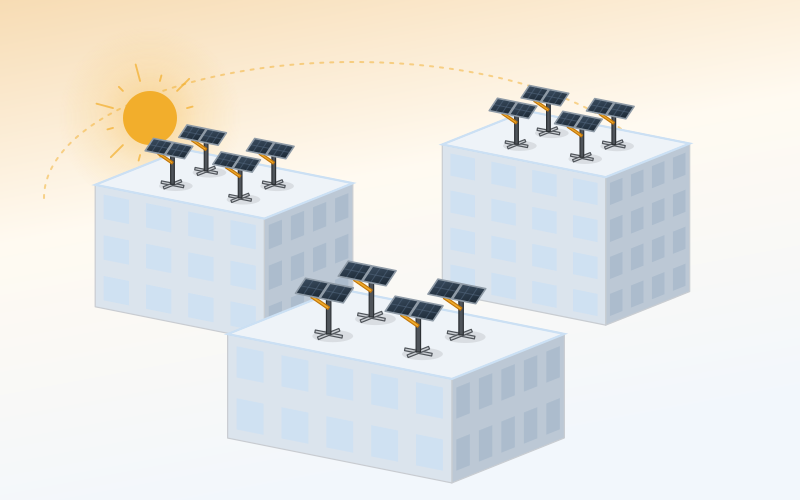
Schematic of three multi-storey office blocks, each flat roof carrying a group of low-profile trackers.Concept visualisation

Commercial / SME

Planned

5 installations

Office and workshop roofs, with the focus on low-load design at ≤ 25 kg/m² and continuous IoT telemetry.

Bratislava, Slovakia3-Actuator Roof

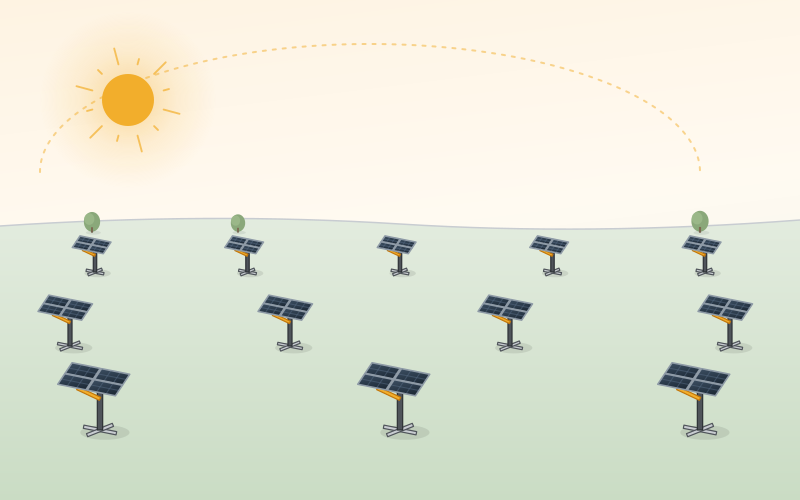
Schematic of rows of RayAlign trackers across open ground, receding toward the horizon.Concept visualisation

Solar park

Planned

20 installations

A planned open-field validation project. The final tracker configuration has not yet been selected.

Győr, HungaryConfiguration under review

Programme scope, not completed installations. Every image in this section is a concept visualisation — no installation photography exists yet.

Annual yieldvs. flat-mounted modules · 3.5× in winter
< 3 h
Install timeon site, with two people
> 99%
Availabilitydesign target, remote monitoring & OTA
50
Planned installationsVienna · Bratislava · Győr

Yield figures are digital-twin results (Vienna, clear sky). Installation time and availability are engineering targets from the EU-funded development programme (Grant Package 2025), not observed fleet data.

Want to host a pilot or see a live system?

We are placing units with sites across Austria, Slovakia and Hungary.

Technical data

Performance, by the numbers.

Comparison of the two current tracker concepts. Values are design targets from the SDD/QFD 2025 package.

Dual-AxisTerrace
Energy gain vs. fixed
2× vs. flat · +49% vs. 30° fixed
Space profile
Very compact
Max. tilt range
±30°
Tracking precision
≤ 0.7°
Power supply
12–24 V DC
Communication
Wi-Fi / LAN / LoRa
Weatherproofing
IP65
Operating temp.
−20 … +60 °C
Control
AI + IoT auto-tracking
Typical install time
< 3 h (two people)
Maintenance
≈ 1× / year
3-ActuatorRoof
Energy gain vs. fixed
High
Space profile
Low profile
Max. tilt range
±30°
Tracking precision
≤ 1.0°
Power supply
12–24 V DC
Communication
Wi-Fi / LAN
Weatherproofing
IP65
Operating temp.
−20 … +60 °C
Control
IoT auto-tracking
Typical install time
< 4 h
Maintenance
Low
Technical parameters for the Dual-Axis and 3-Actuator tracker concepts
ParameterDual-AxisTerrace3-ActuatorRoof
Energy gain vs. fixed2× vs. flat · +49% vs. 30° fixedHigh
Space profileVery compactLow profile
Max. tilt range±30°±30°
Tracking precision≤ 0.7°≤ 1.0°
Power supply12–24 V DC12–24 V DC
CommunicationWi-Fi / LAN / LoRaWi-Fi / LAN
WeatherproofingIP65IP65
Operating temp.−20 … +60 °C−20 … +60 °C
ControlAI + IoT auto-trackingIoT auto-tracking
Typical install time< 3 h (two people)< 4 h
Maintenance≈ 1× / yearLow

All values are engineering targets from the SDD/QFD 2025 design package, pending pilot validation. Energy-gain figures are digital-twin results for Vienna under clear-sky conditions — an upper bound.

Need the full datasheet?

Tell us the site and we'll send the current specification pack, plus what is still a design target and what is already measured.

Team & partners

Engineering energy, together.

RayAlign is developed by the current team at Somos-Co GmbH in Vienna — combining electronics, software and project delivery.

  • Vencel Somos

    Electronic Design & Programming

    Control electronics, firmware, telemetry, and OTA updates.

  • Peter Somos

    Project Management

    Delivery leadership, roadmap, quality, and stakeholder coordination.

Partners & affiliations

  • TU Wien

    Research & engineering collaboration

  • Circular Analytics

    Data, analytics & training

  • UMS GmbH

    Project partner

  • key-values

    Project partner

  • Somos-Co GmbH

    Project owner & delivery

Named collaborators in the EU-funded development programme. Listing does not imply endorsement of the performance figures on this page.

Contact

Let's put trackers on your customers' roofs.

Tell us about your business and the region you cover, and we'll come back with partner terms, platform access and the technical documentation. We reply within one business day, and your details are used only to answer this enquiry.

What brings you here?
Type of business

What you install today, the brands you carry, and what you would want from a tracker supplier.

Prefer to talk?

A real engineer will answer.

No generic sales script — just a practical conversation about whether this fits your business.

+43 676 95 35 217

Mon–Fri, 9:00–17:00 (CET/CEST)

hello@somos-co.com

Reply within one business day

Somos-Co GmbHVienna, Austria